Whether a business in The Gambia needs a website is asked less often now than it was two years ago. Most owners already sense the answer. What holds them back is uncertainty about the cost, about the process, and about whether it will make any difference for their particular kind of business.
This post gives seven reasons it does, grounded in how customers here actually behave, along with what a good website has to do, what it costs to keep one running, and the question people ask only after theirs is working.
On this page
Why a business in The Gambia needs a website in 2026
According to DataReportal’s Digital 2025 report there were 1.28 million internet users in The Gambia at the start of 2025. Mobile connections stand at 113% of the population, which means many people carry more than one active SIM. Social media use grew by more than 11% in a single year.
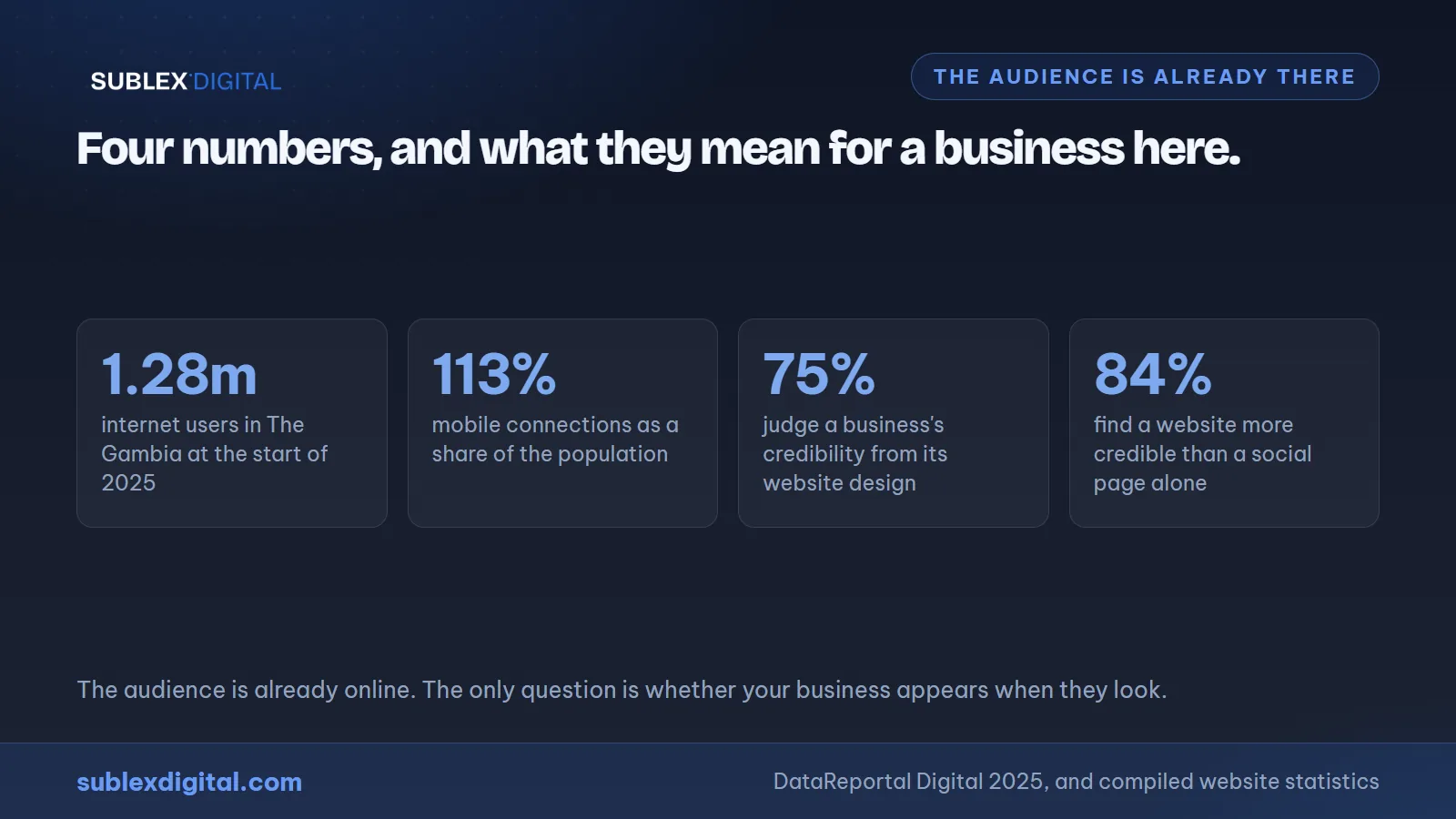
The audience is already there. The only question is whether your business appears when they look for what you sell.
A website remains the most reliable way to control what people find when they search. Social platforms help, but they sit on top of something that ought to belong to you, and that something is your website.
Reason 1: Your website works around the clock
Your staff go home. The shop closes. The phone stops being answered. Your website does none of that. It is there at eight on a Monday morning and at eleven on a Sunday night, giving people what they need to decide whether to contact you.
This matters most for businesses that hear from people outside the country. An international partner, a family member in the diaspora looking for a service at home, a tourist working out where to stay before they land. None of them can telephone you out of hours, and all of them are deciding something. A website handles that first contact whether you are awake or not.
Reason 2: Customers judge your credibility before they call
Research consistently finds that around 75% of people judge a business’s credibility from its website design, and 84% consider a website more credible than a social media page on its own. Those figures come from compiled website statistics drawing on work by Stanford and several industry sources.
In practice this means that before somebody telephones you, sends a WhatsApp message or walks through your door, there is a strong chance they have already looked you up. What they found decided whether they bothered.
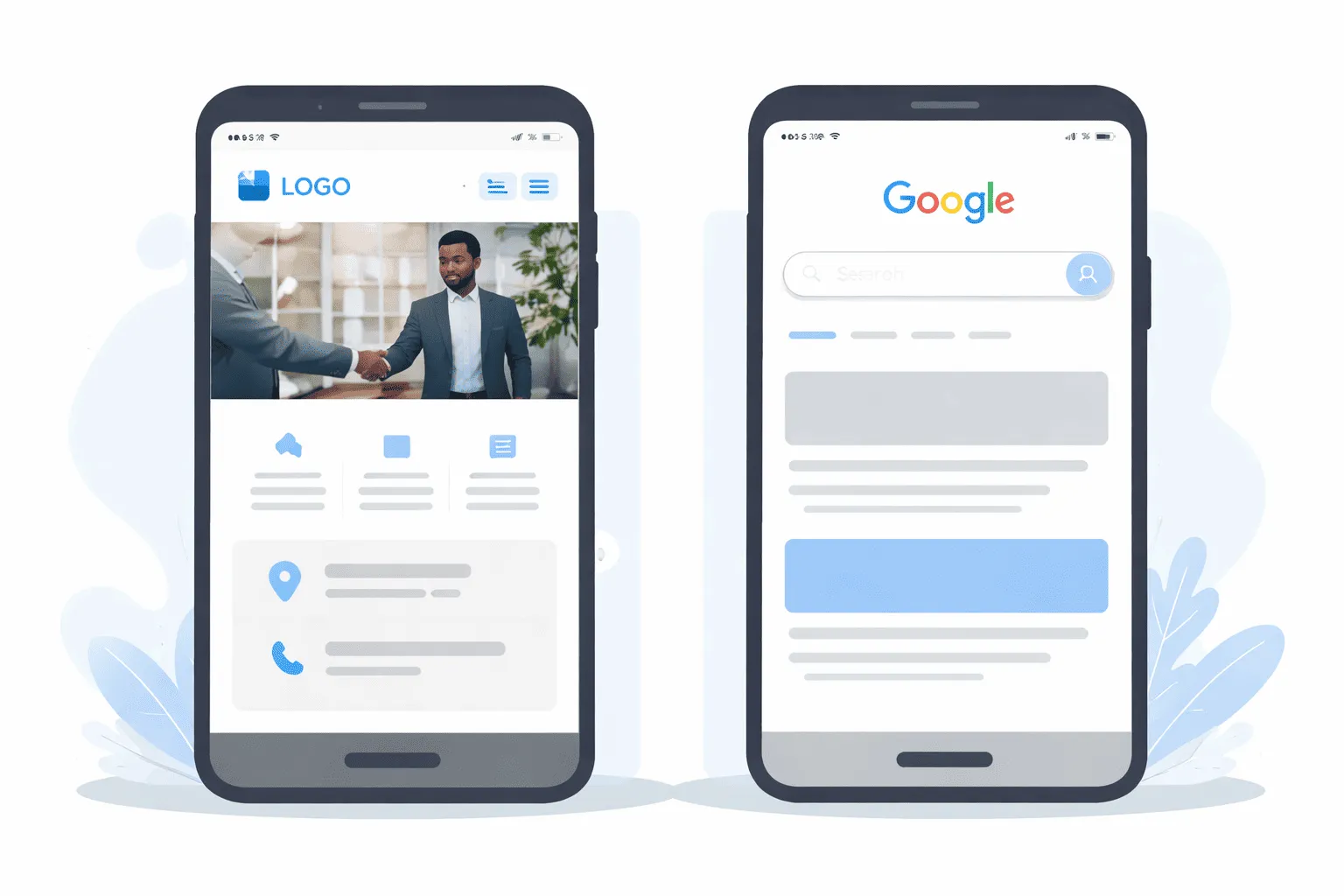
A clear, professional site says you are organised and serious. No site, or an abandoned one, says something else, and it says it to everyone who checks.
Reason 3: You own it, and nobody can take it down
Facebook can change its algorithm and cut your reach overnight. A page can be reported and restricted. An account can be hacked, or simply lost when the person who set it up leaves. None of that can happen to your own website.
This is not a small point. A business whose entire online presence sits on one social platform is one policy change away from being invisible. A website is the stable centre that everything else points back at, and it is the only part of your online presence that is actually yours.
Five reasons your online presence in The Gambia is costing you customers goes further into why social media alone is not a strategy.
Reason 4: Google can send you customers for nothing
When somebody in Serrekunda, Brikama or Banjul searches for what you sell, Google decides what they see. A properly built site with the right content can appear in those results, which means customers finding you without you paying for an advertisement.

This is organic search traffic, and in a market this size the opportunity is unusual. Very few businesses here have invested in it properly, so the positions are still available. A business that builds a solid, content-rich site now can hold the top of the first page for its industry before the space fills.
Reason 5: A website works for every kind of business
People assume websites are mainly for technology companies or large firms. They are not.
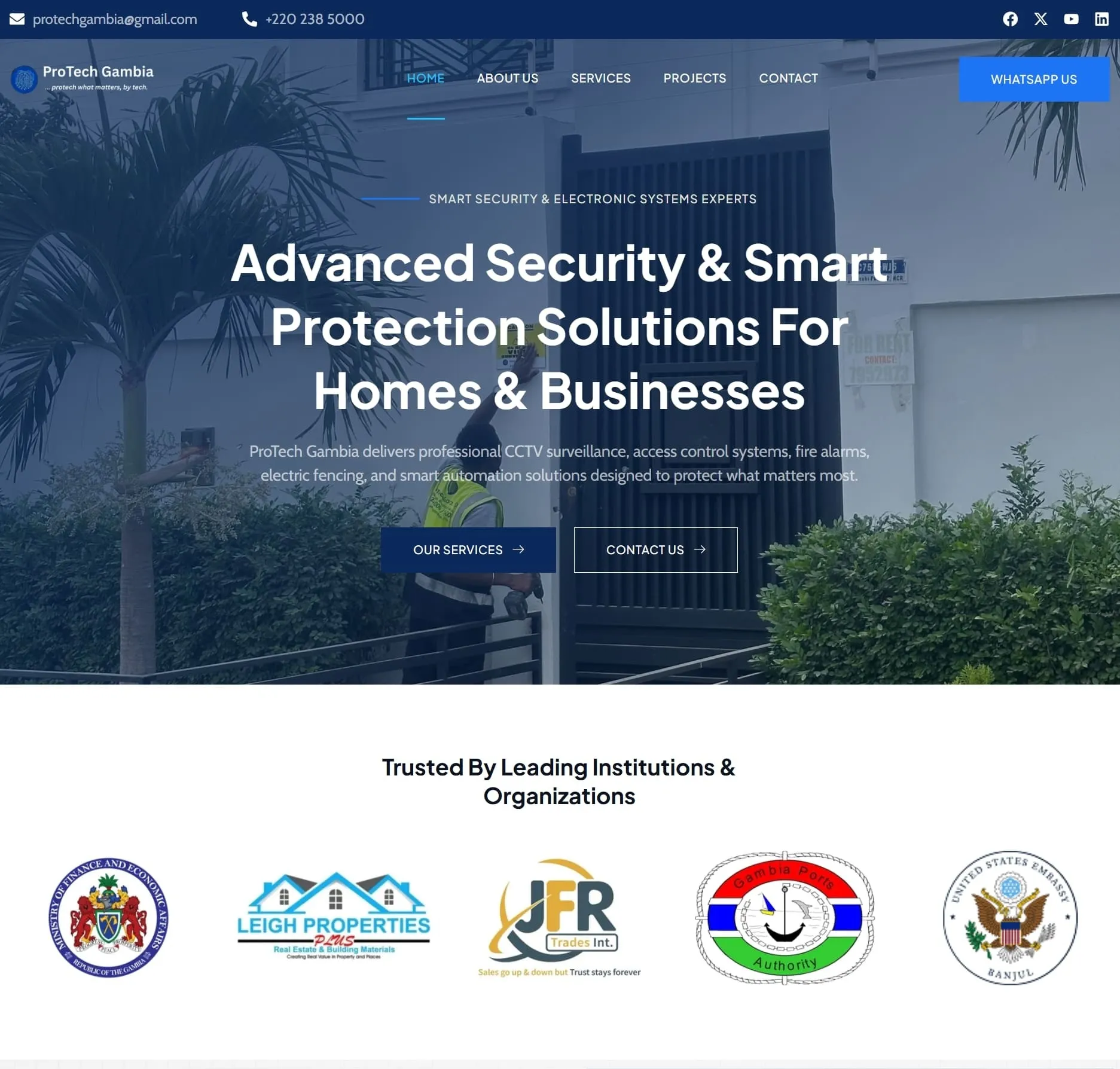
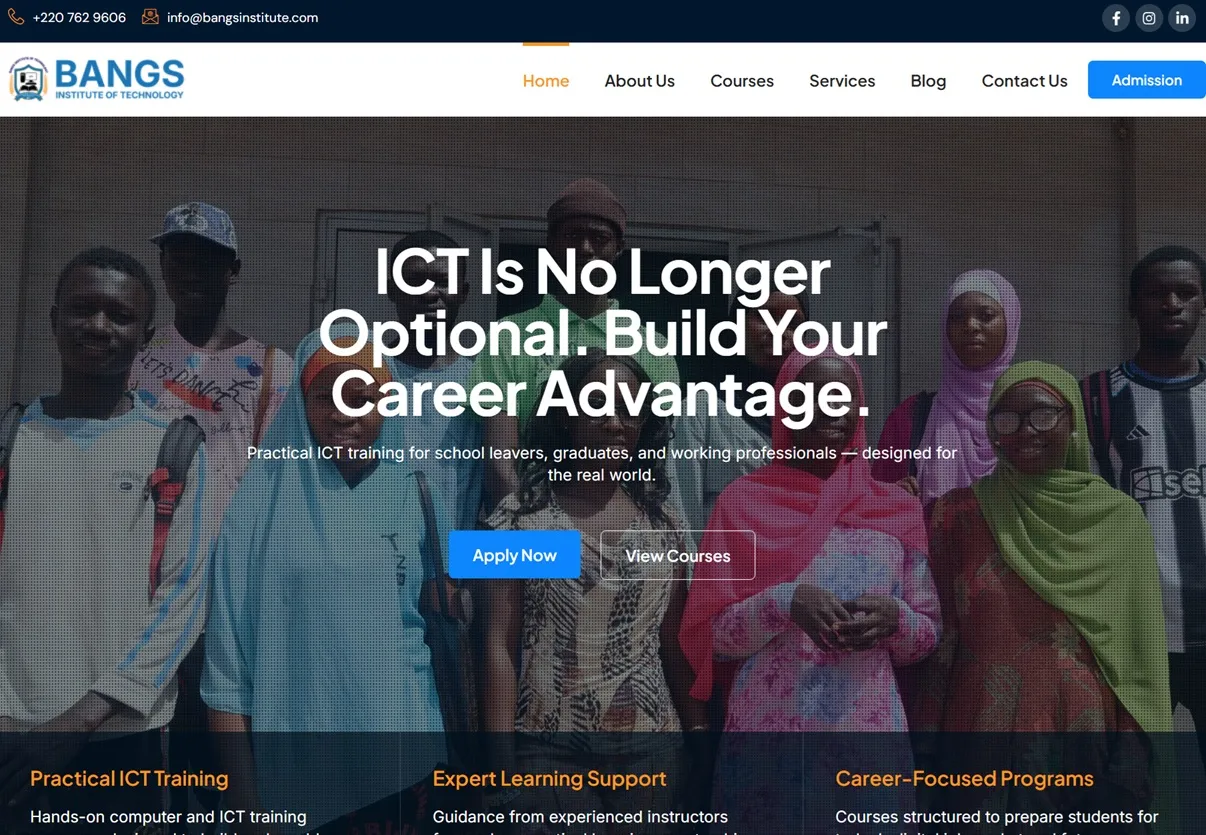
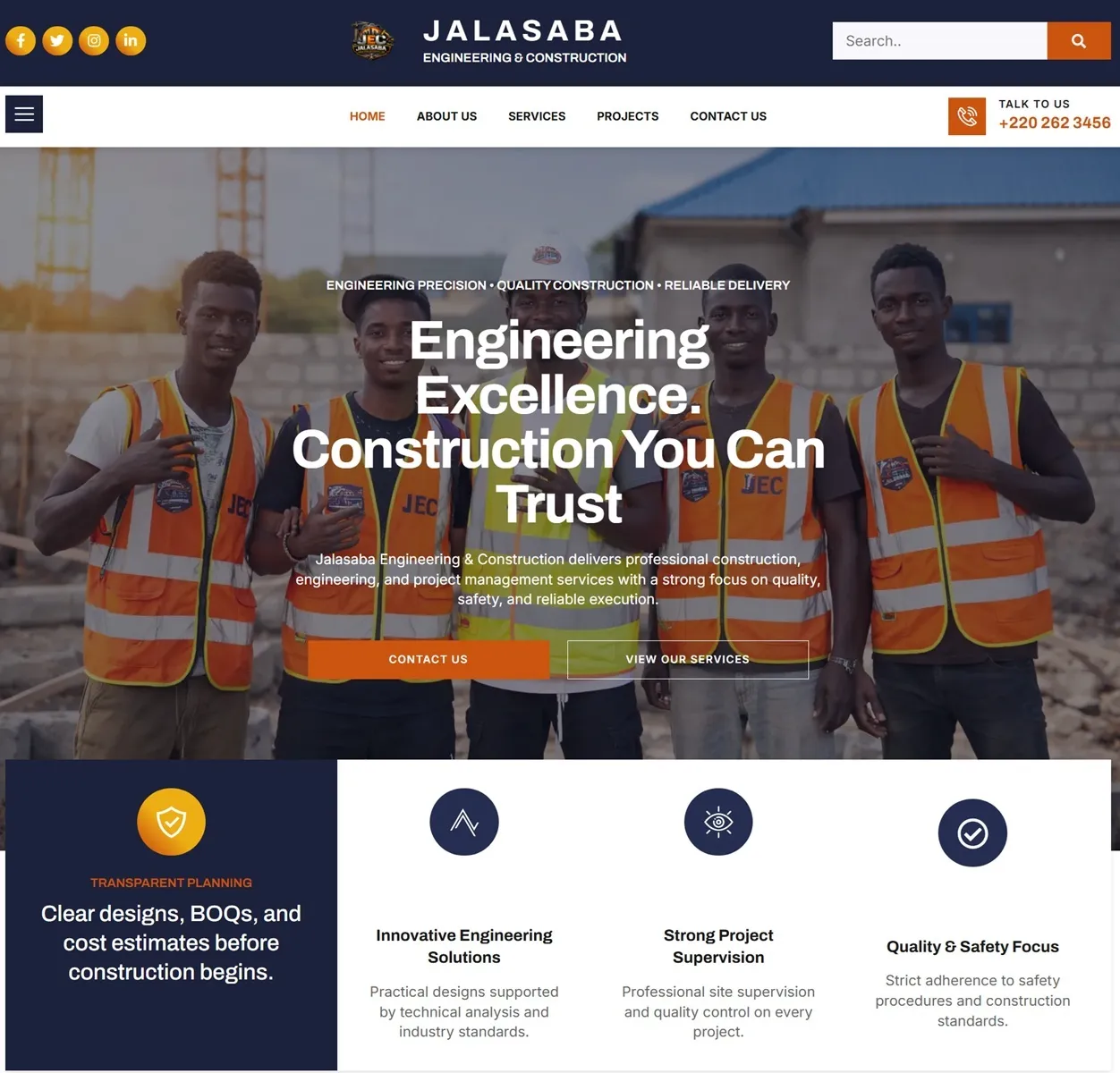
A construction company uses one to show completed projects and win contracts. A school or training institute publishes course information and builds institutional credibility. A security equipment supplier lists products and captures enquiries. A clinic shares its services, its location and how to make an appointment.
Sublex Digital has built for several of these. The work is on the portfolio page, and each one was built around what that organisation needed rather than from a template.
Reason 6: It puts you ahead of most local competitors right now
A large proportion of businesses in The Gambia still have no functioning, professional website. That is not a reason to wait. It is the strongest argument for moving now.
The window exists because the market is early. This is a small country with little competition in search results, so a well-built site can rank faster here than the same site would in a crowded market. The businesses that build properly over the next year or two will hold the first page for their industry before the space closes, and first pages, once held, are difficult to take.
Reason 7: It is an asset, not a one-off cost
A well-built website does not expire. Once it is live it keeps working, month after month. An advertisement stops the moment you stop paying for it. A website keeps attracting visitors, generating enquiries and building credibility long after the invoice is settled.
What it costs afterwards is maintenance: security updates, backups, and keeping the content current. That cost is predictable, and how much a website costs in The Gambia sets out both halves, the build and the yearly running cost, in real figures.
What a good one actually has to do
A website for a business here does not need to be complicated. It needs to do four things.
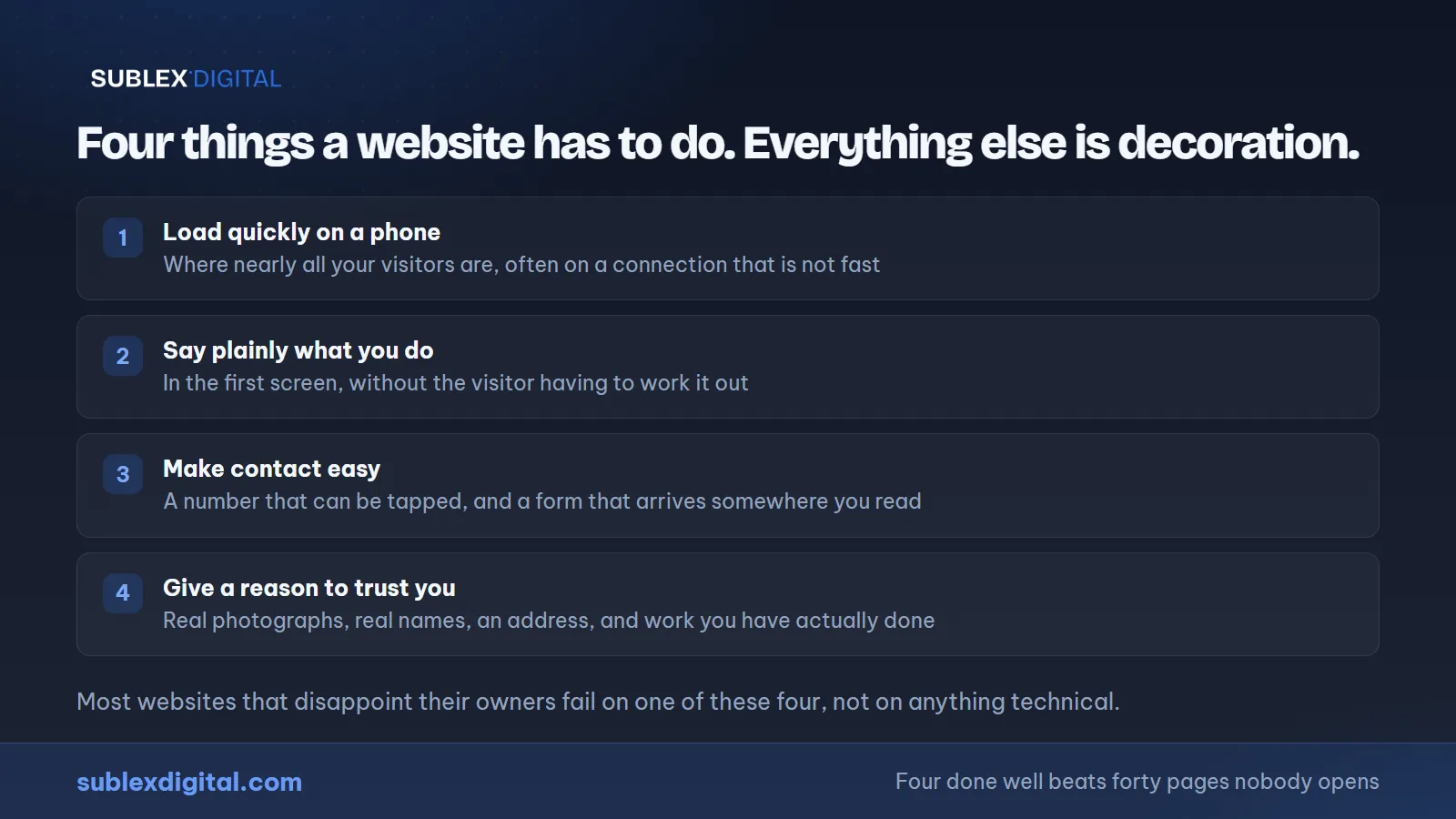
Load quickly on a phone, because that is where nearly all of your visitors are, often on a connection that is not fast.
Say plainly what the business does, in the first screen, without the visitor having to work it out.
Make contact easy, with a number that is tappable and a form that arrives somewhere you actually read.
Give a reason to trust you: real photographs, real names, an address, and work you have done.
Those four, done well, are worth more than a site with forty pages nobody opens. Most websites that disappoint their owners fail on one of these four rather than on anything technical.
What it costs to keep running
The build is one payment. Keeping the site online is a yearly one, and it is the part most owners do not budget for: hosting, the domain renewal, business email, and maintenance.
None of it is large, and all of it is predictable. What is expensive is discovering it late, when a domain has lapsed and somebody else has registered it, or when a site nobody updated for two years has to be rebuilt rather than repaired.
Budget for the year before you commit to the build. A site you cannot afford to keep online is worse than no site at all, because a dead page with your business name on it is what people find when they search for you.
The three objections, answered
Most owners who decide against a website give one of three reasons. All three are reasonable and all three are worth answering plainly.
“I already have a Facebook page.” Keep it. It reaches the people who already follow you, which is exactly what it is good at. What it cannot do is reach the people who have never heard of you, because a page barely appears in a Google search and is ordered by what is recent rather than by what a customer needs. Your opening hours are under last week’s post. A website is where the information sits still.
“All my customers already know me.” Today’s do. The question is where next year’s come from, and increasingly they come from a search, a recommendation they then look up, or a relative abroad checking on behalf of somebody here. A business in The Gambia needs a website less for the customers it has than for the ones deciding whether to become customers.
“It is too expensive for a business my size.” It is a real cost and it should be planned for, both the build and the yearly running. But compare it to what it replaces. A site that answers the same twenty questions all year costs less than the hours spent answering them, and unlike an advertisement it does not stop the day you stop paying. If the figure is genuinely out of reach this year, start with one page that loads fast, says what you do and makes contact easy. One good page beats a plan you never act on.
The question people ask afterwards
Every reason above is about being found. Here is the one that arrives after the site starts working, and it catches people out.
A website that works generates enquiries, and somebody has to answer them.
Usually that somebody is you, on WhatsApp, at half past nine at night, typing your opening hours out for the fourth time this week. Where are you. Do you deliver to Brikama. How much is the small one. The site did its job. The work it created landed on you.
An assistant on the site answers those questions in the visitor’s own words, at any hour, which is when a good number of them are asked. The alternative is not that the customer waits. It is that they message somebody else.
That is what we built Sublex Chat for. It answers only from what your business gives it, so it will not invent a price or an opening time, and when it does not know something it says so and takes the customer’s number so you can follow up. It works on a site we build and on one you already have.
Where to start
Sublex Digital designs and builds websites around the four things above. Every project begins with a consultation to understand the business, define the scope and agree what success looks like, and a written fixed quote follows within 24 business hours.
Browse the full list of services, or read what our web design service includes to see how a project runs from first contact to long term support.
When you are ready to talk about your own situation, book a free consultation. No obligation and no pressure. It is a conversation about what your business needs and what would make sense to build.
Frequently asked questions
Does a small business in The Gambia really need a website?
If customers look you up before deciding, then yes, and they do. A website is the only part of your online presence you own and control, and it works at hours when nobody is answering the phone. A shop with steady local trade may need one less urgently than a service business, but the reasons above apply to both.
Is a Facebook page enough?
It is a good front door and a poor building. A page is ordered by what is recent, so your opening hours vanish under last week’s post, it barely appears in a Google search, and the platform sets the rules and can change them. Keep the page. It reaches people who already follow you. The website reaches the ones who have never heard of you.
How much does a website cost in The Gambia?
It depends on how many pages the site needs and what it has to do. Sublex Digital publishes a starting figure for each of its packages, and a separate annual plan covering hosting, the domain and business email, so you can see where a project lands before contacting anybody. Compare what is included rather than the headline total.
How long does it take to build?
A five page site is typically 7 to 14 days once the content is ready, and a larger business site 14 to 21. The usual cause of delay is not design. It is waiting for photographs and text from the client.
What do I need to provide?
Your logo if you have one, photographs, and a plain description of what you do and who you do it for. If those do not exist yet they can be created, but gathering what you already have before the first meeting will shorten the project and sharpen the quote.
Who should own the domain name?
You should, always. It should be registered in your business’s name with you as the contact, even when an agency manages it day to day. If it is registered to the designer, you cannot move your site without their cooperation.
Will a website actually bring me customers?
It will make you findable and it will make you credible, which are the two things that have to be true before anyone contacts you. Whether it brings enquiries depends on whether it says clearly what you do, appears in search, and makes getting in touch easy. A site that does none of those is a brochure nobody asked for.
Can I add an AI assistant to a site I already have?
Yes. It goes onto an existing site without rebuilding it. On WordPress it is a plugin: install it, paste an eight character code, and it is on every page. It works on most other platforms too, and it answers from your own material, so setting it up is mostly a conversation about what your business gets asked.
What happens if I do nothing?
Nothing dramatic, which is why this decision gets postponed for years. You keep the customers who already know you. What you do not see is the enquiry that went to a competitor because they appeared in a search and you did not, or the person who looked you up, found nothing, and quietly decided against calling. The cost of not having a website is real but invisible, and that is precisely what makes it easy to ignore.