Hiring a website design company in The Gambia is not a small decision. A website is often the first thing a customer, a partner or a donor sees before they ever contact you, and the company you choose will shape how your organisation appears online for years.
The difficulty is that this market has very little transparency. What is included, what happens after launch, and who is responsible when something breaks are rarely written down anywhere you can read them before you pay.
This post gives you six specific things to check, the questions to ask out loud in the meeting, and one more that almost nobody thinks to ask.
On this page
Why the choice matters more than it looks
There are 1.28 million internet users in The Gambia, according to DataReportal. They are searching for businesses, checking organisations, and forming opinions from what they find. A site built quickly and cheaply, with no structure and no maintenance, does not merely look unprofessional. It actively costs you trust.
A properly built site generates enquiries, builds credibility, and keeps working long after the project is finished. The difference between those two outcomes usually comes down to the company that built it.
If you are still deciding whether your business needs a website at all, 7 proven reasons every business in The Gambia needs a website covers that question first.
1. Do they have a verified local portfolio?
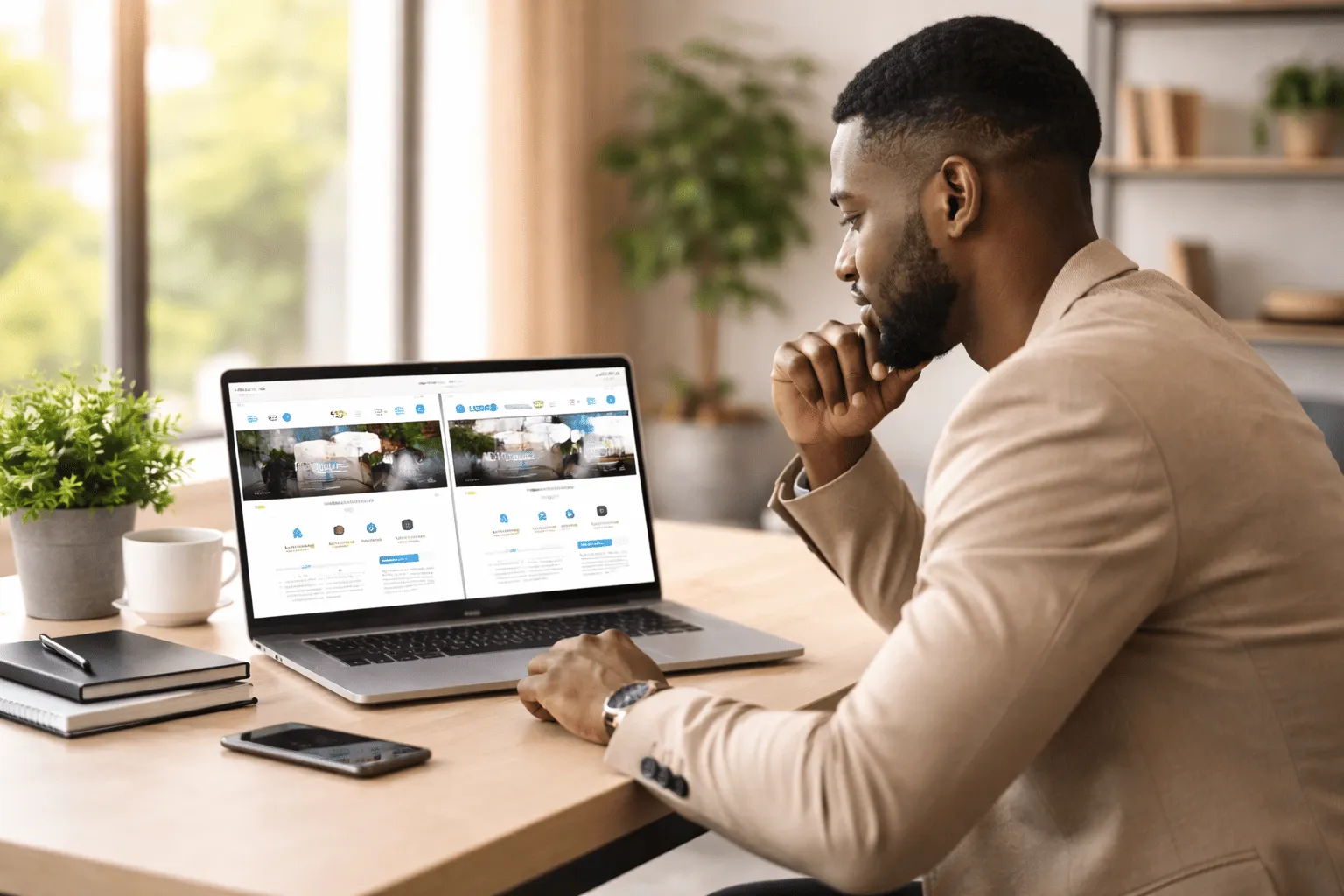
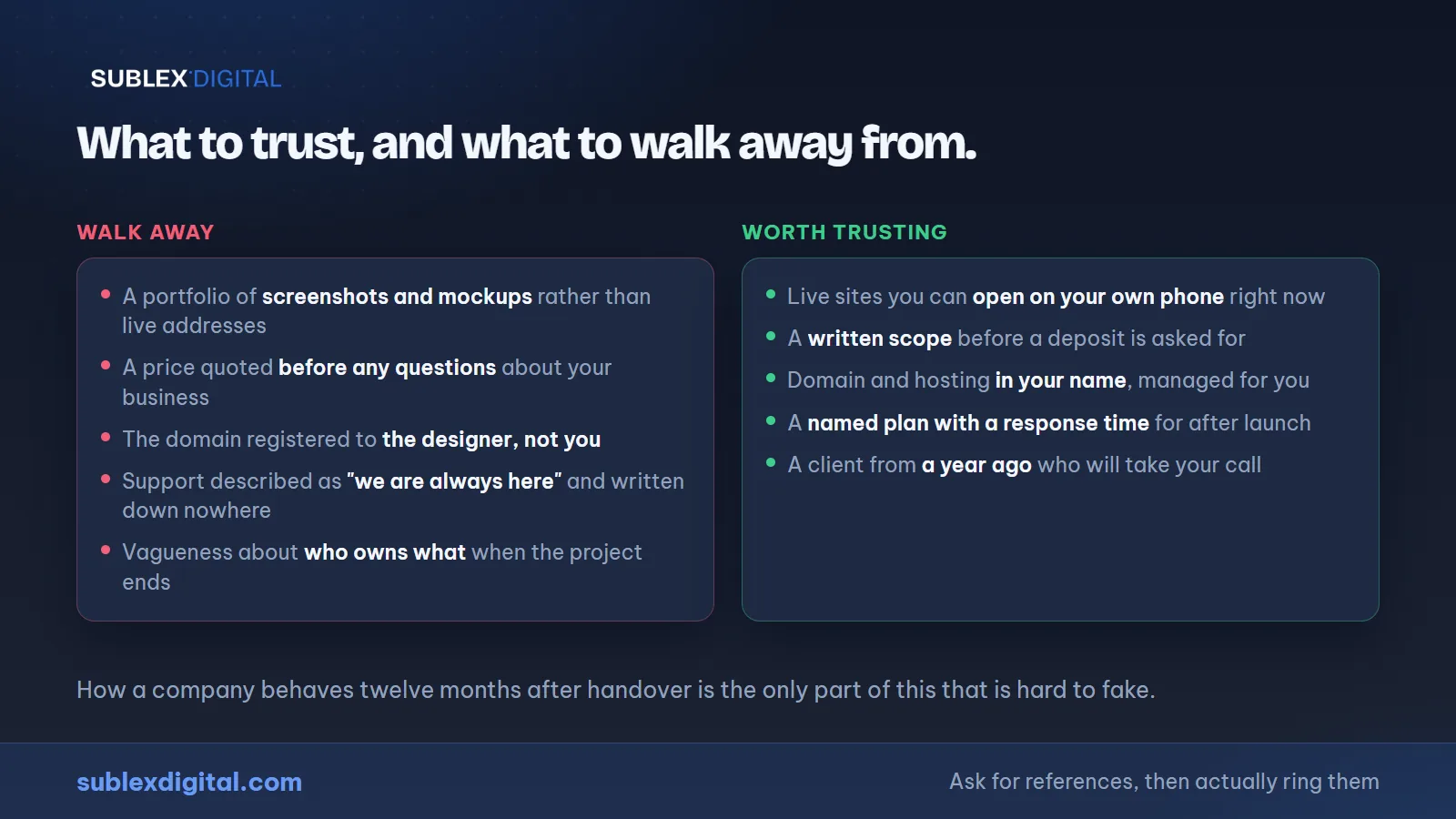
Any web designer working in The Gambia should be able to show you live websites they have built for local clients. Not screenshots. Not mockups. Live addresses you can open on your own phone.
When you look at them, ask three things. Do they load quickly on a mobile connection. Is the content current. Does the business actually appear to use the site. A portfolio full of sites that are slow, broken, or plainly abandoned after launch is telling you exactly how that company behaves once the cheque has cleared.
Local work also shows the company understands the kinds of businesses operating here and what a Gambian audience expects to find. A portfolio of overseas template sites is not the same thing.
2. Can they explain their process before you pay?
A professional company should be able to walk you through their process step by step before you agree to anything: how they gather requirements, how they structure the content, what the design and review stages look like, what you need to provide, and a realistic delivery timeline.
If a company quotes a price without asking detailed questions about your business, your goals and what the site has to do, the work will not be tailored to you. It also means there is no defined scope, which is what disputes are made of later.
A written scope should name the number of pages, what is on each of them, who writes the words, who supplies the photographs, how many rounds of changes are included, what happens when you want a seventh round, and the date the site is expected to go live. If any of those is missing, it will be argued about later, and the person with nothing in writing loses that argument.
How much a website costs in The Gambia sets out what a properly scoped project includes and what moves the price.
3. Do they handle hosting, domain and email too?
A website needs a domain name, hosting, an SSL certificate and usually professional email addresses. These are not optional extras. They are the infrastructure that keeps the site online and secure.
Some designers build the site and leave you to work the rest out, which means managing several providers and chasing renewals yourself. A company that handles registration, hosting, email configuration and renewals gives you one place to call when something goes wrong, and somebody who is watching the dates so a domain does not lapse.
The failure this prevents is specific and common. The domain sits with one provider, the hosting with another, the email with a third, and each renewal notice goes to an address somebody set up two years ago and no longer reads. The first anyone notices is when the site disappears, or when email stops arriving, and by then you are trying to prove ownership to a company you have never spoken to.
Ask who holds each of the three, in whose name, and where the renewal reminder is sent. If the answer is three companies and an old email address, that is your answer.
4. What happens after your website goes live?
This is where most web design relationships here fall apart. The site launches, the handover happens, and the company becomes unreachable. Six months later a plugin has broken a form, the site is slow, and there is nobody to call.
A WordPress site needs regular updates to its core software, themes and plugins. Without them the security holes accumulate and the site becomes a target. Content needs to stay current. Performance needs watching. None of that is optional for a site meant to represent your business.
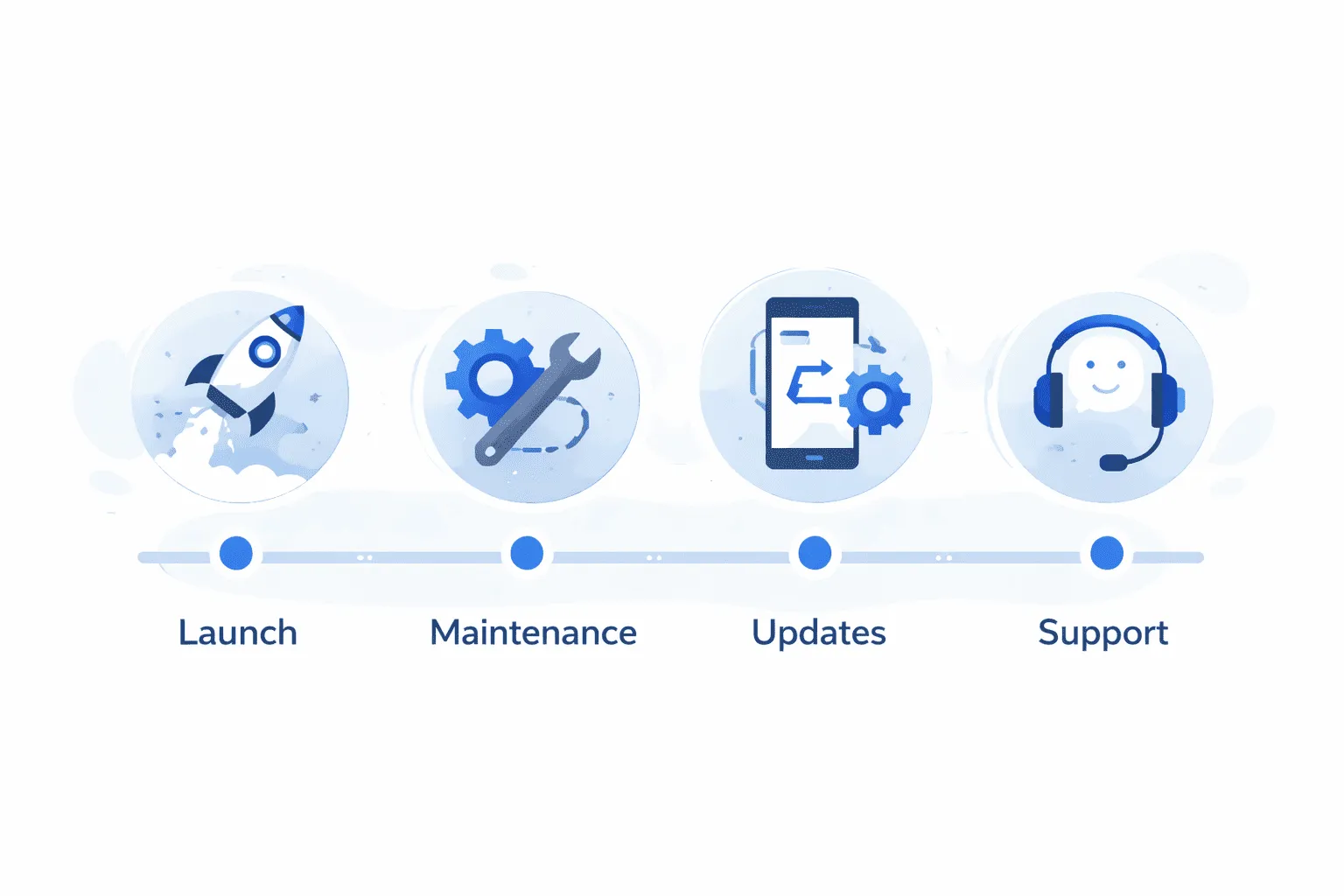
Ask what the arrangement is on the day after handover, and ask for it in writing. “We are always here for our clients” is not an arrangement. A named plan with a response time is.
5. Do they understand your type of business?
A construction company needs a different website from a training institute. A security equipment supplier has different requirements from an NGO. A company that applies one template to every client regardless of industry is not the same as one that works out what your organisation needs to communicate, and to whom.
Pay attention to the questions they ask you. Do they want to know about your customers, your services, your competitors and your goals? Or do they move straight to colours and layouts? The quality of their questions predicts the quality of the work.
6. Is there a real person you can reach after launch?
Accountability matters more here than most clients realise before something goes wrong. A company with a local presence, a real number, and a record of answering clients after the project closes is a fundamentally different proposition from a freelancer who has moved on.
Ask for references, and actually contact them. The useful question is not whether the company was good to work with during the project. It is whether they replied six months afterwards.
There are simpler checks worth doing too. Does the company have an address you could visit. Does the phone number on the site get answered. Is the business registered. None of that guarantees good work, but a company with a name, a place and a number has something to lose by disappearing, and a person working from an account they can delete does not.
And notice how they behave while they are still selling to you. A company that takes three days to answer a question before you have paid anything is showing you their response time, not having a bad week.
The questions to ask, in one list
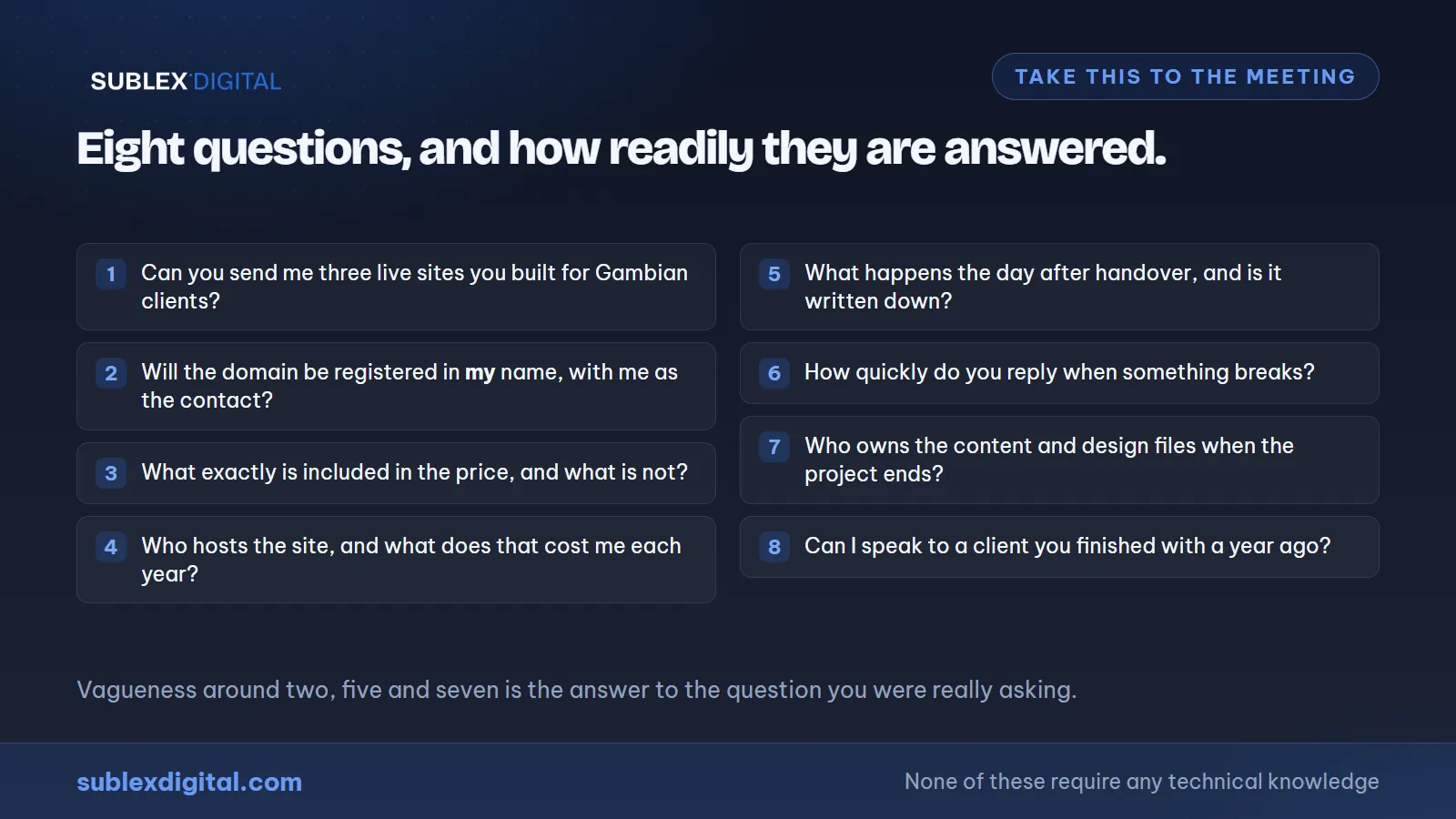
Take these to the meeting. The answers, and how readily they come, will tell you more than any portfolio.
- Can you send me three live sites you built for Gambian clients?
- Will the domain be registered in my name, with me as the contact?
- What exactly is included in the price, and what is not?
- Who hosts the site, and what does that cost me each year?
- What happens on the day after handover, and is that written down?
- How quickly do you reply when something breaks?
- Who owns the content and the design files when the project ends?
- Can I speak to a client you finished with a year ago?
A company that answers all eight without hesitating has thought about this before. One that becomes vague around questions two, five and seven is telling you something.
The question almost nobody asks
Every question above is about building and keeping the site. Here is the one that comes after, and it is the one people are least prepared for.
A website that works generates enquiries, and somebody has to answer them.
Usually that somebody is you, on WhatsApp, at half past nine at night, typing out your opening hours for the fourth time that week. Where are you. Do you deliver to Brikama. How much is the small one. The site did its job. The work it created landed on you.
So ask any company you are considering what happens to the enquiries their website produces. Most have not thought about it, because it is not their problem after handover.
It is worth thinking about, because the answer is not more staff. An assistant on the site can answer the questions your business gets asked constantly, in the visitor’s own words, at eleven at night, when the alternative is that they message somebody else instead.
That is what we built Sublex Chat for. It answers only from what your business gives it, so it will not invent a price or an opening time, and when it does not know something it says so and takes the customer’s number so you can follow up. It works on a site we built and on one you already have.
What to expect from Sublex Digital
Sublex Digital is a website design company in The Gambia built around the gaps this post describes.
Every project starts with a scoping consultation before any work begins, covering the number of pages, the content structure, the functionality, the timeline, and what success looks like for that client. A written fixed quote follows within 24 business hours, and no work starts without a signed scope agreement. Starting prices are published in how much a website costs in The Gambia, because a price you cannot find is a question you have to ask.
Infrastructure is handled end to end: domain registration, hosting, SSL, DNS and professional email, with renewal oversight built in so nothing lapses because a reminder was missed. The full offering is on the services page, and what our web design service includes explains how a project runs from first contact to long term support.
After launch there are structured maintenance plans, priced separately and scoped clearly, so you know what you are getting.
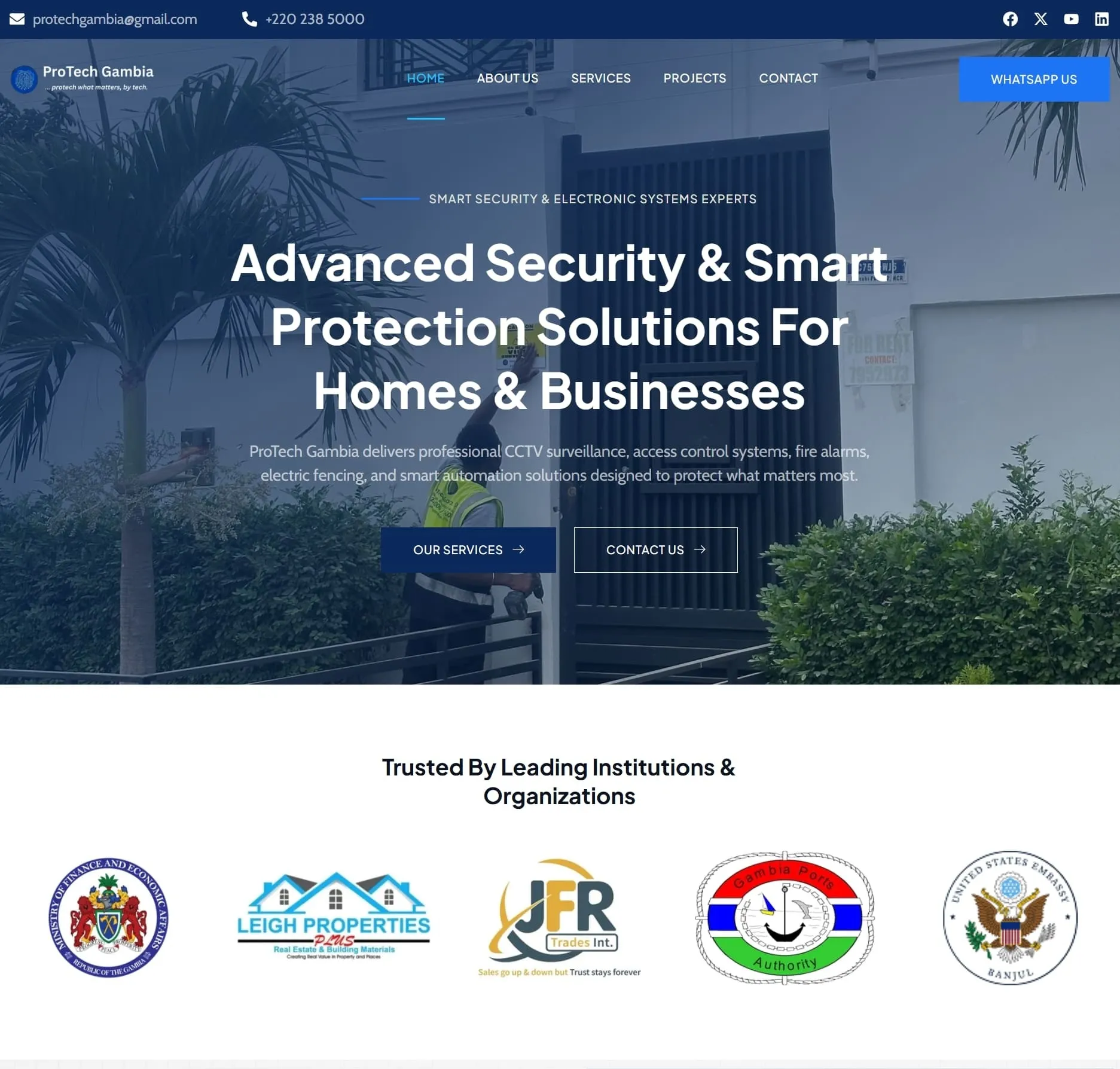
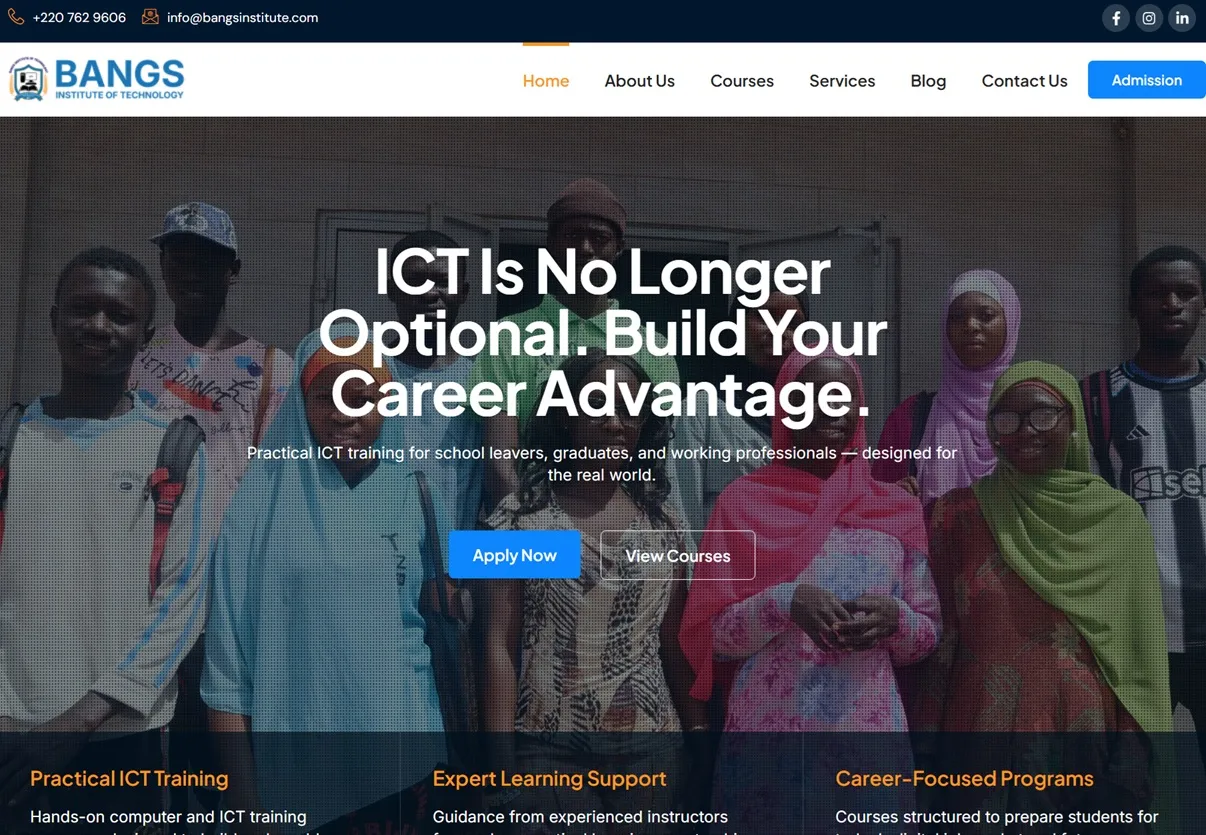
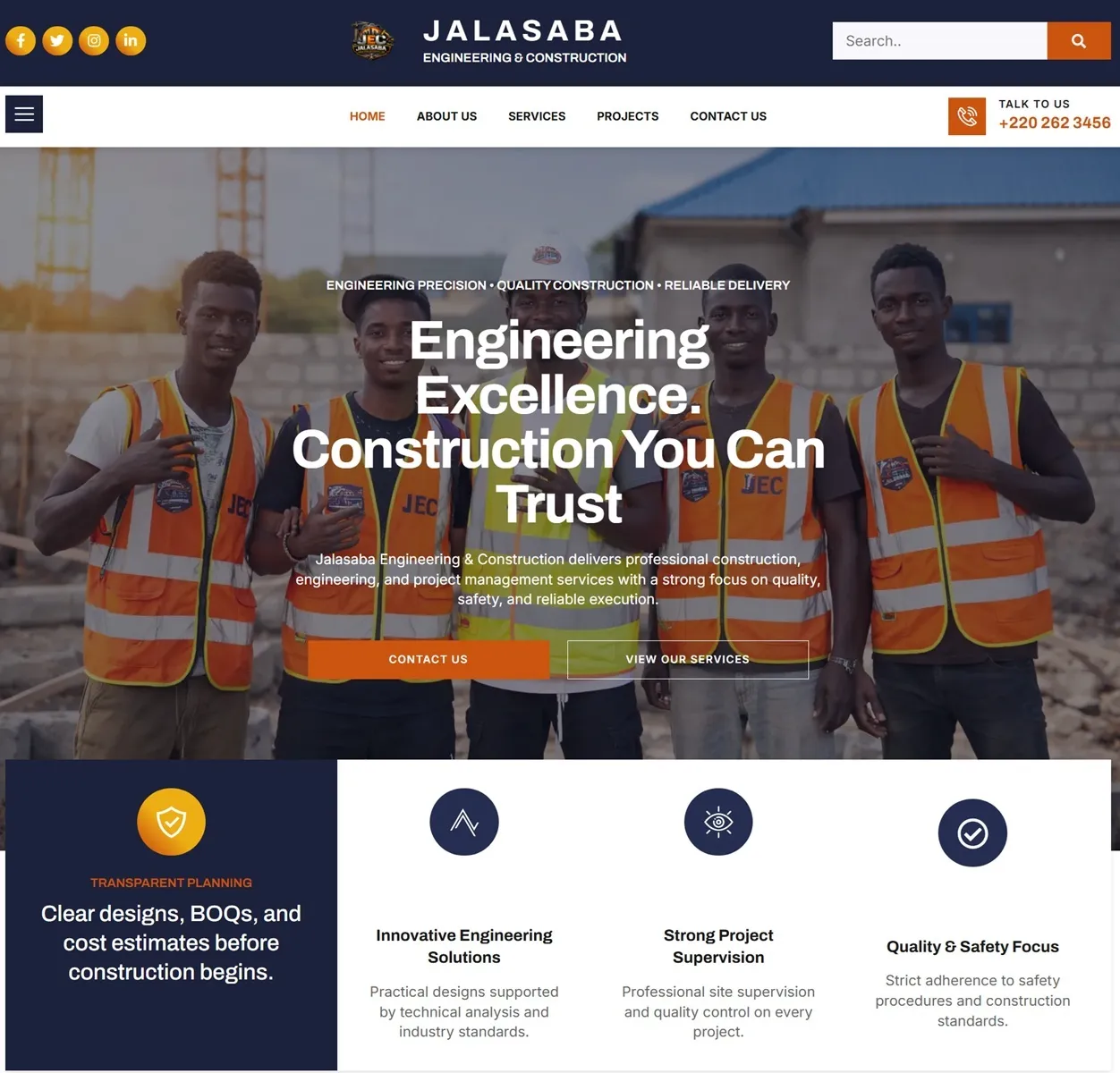
Recent projects include ProTech Gambia, Bangs Institute of Technology, Jalasaba Engineering and Construction and EasyTechDigest. Each was scoped, built and handed over with the infrastructure in place. The work is on the portfolio page.
If you are comparing web designers and want a straight conversation about what your project would involve, book a free consultation. No obligation. It is a structured conversation about your requirements and what it would take to build the right site.
Frequently asked questions about hiring a website design company in The Gambia
How do I know if a web designer in The Gambia is any good?
Ask for three live sites they built for Gambian clients and open all three on your phone. Check they load quickly, that the content is current, and that the business still appears to use the site. Then ask to speak to a client they finished with a year ago. How a company behaves twelve months after handover is the only part of this that is hard to fake.
Who should own my domain name?
You should, always. The domain should be registered in your business’s name with you as the contact, even when the agency manages it day to day. If it is registered to the designer, you cannot move your site without their cooperation. Ask this before you pay any deposit.
What should be included in a web design quote?
Domain registration, hosting setup, a design built around your brand, a layout that works on phones, basic search setup, the core pages, a business email address, an SSL certificate and a handover session. Anything missing from that list is a question to ask rather than a detail to assume.
How long does it take to build a website in The Gambia?
A five page site is typically 7 to 14 days once the content is ready, a ten page business site 14 to 21 days, and an institutional or e-commerce build 21 to 35. The biggest cause of delay is not design. It is waiting for photographs and text from the client.
Should I hire a freelancer or a company?
Both can build a good site. The difference shows afterwards. A company with a local presence and a maintenance plan has a reason to answer in month six; a freelancer who has moved to the next project may not. If you choose a freelancer, get the ownership and support arrangements in writing, because that is where these relationships usually fail.
What is the difference between managed and unmanaged hosting?
Unmanaged means you hold the hosting account and handle updates, security and problems yourself. Managed means the agency does all of it and answers when something breaks. Managed costs more each year and is the reason a site is still working three years later.
What if I already have a website and want to move it to someone else?
You can, provided you can prove you own the domain, which is why the ownership question matters so much earlier in this post. A migration moves the files, the database and the DNS across, and it is usually a fixed one-off fee rather than a rebuild. Ask for a short period of support after the move, because the problems that follow a migration tend to appear in the first fortnight, not on the day.
Can I add an AI assistant to a website I already have?
Yes. An assistant is added to an existing site without rebuilding it. On WordPress that is a plugin: install it, paste an eight character code, and it is on every page. It works on most other platforms too. It answers from your own material, so the setup is mostly a conversation about what your business actually gets asked.
Before you sign anything
The six checks in this post are not difficult, and none of them requires technical knowledge. They are simply the questions that a company doing this properly will be glad to answer, and that a company doing it badly will avoid.
Ask them out loud, ask for the answers in writing, and pay attention to which questions cause hesitation. That is where the information is.